The first time AI surprised me was in the 90s.
I studied Computer Science at Queen’s University Belfast in the late 90s. One project that stuck with me was an AI and computer vision exercise involving images of four different tanks.
The tanks appeared in different environments — snow, grass, jungle and sand — and from different orientations. The challenge was to write software that could take an image we hadn’t seen before and identify which tank was in it.
We had to extract useful information from the image and use it to make a classification. By today’s standards it was primitive, but at the time it blew my mind.
I’d written software that could look at something it hadn’t seen before and tell me what it was.
AI could help build the software.
When the ChatGPT moment happened, I became interested in where AI was heading. AI-assisted development was one of the areas I explored early.
Initially, I wasn’t convinced. The tools were interesting, but the workflow was clunky. I could see the potential, but I didn’t yet trust it for serious production work.
Then I got an opportunity to test that assumption on a platform I knew well.
There was a platform we’d wanted to rebuild for years.
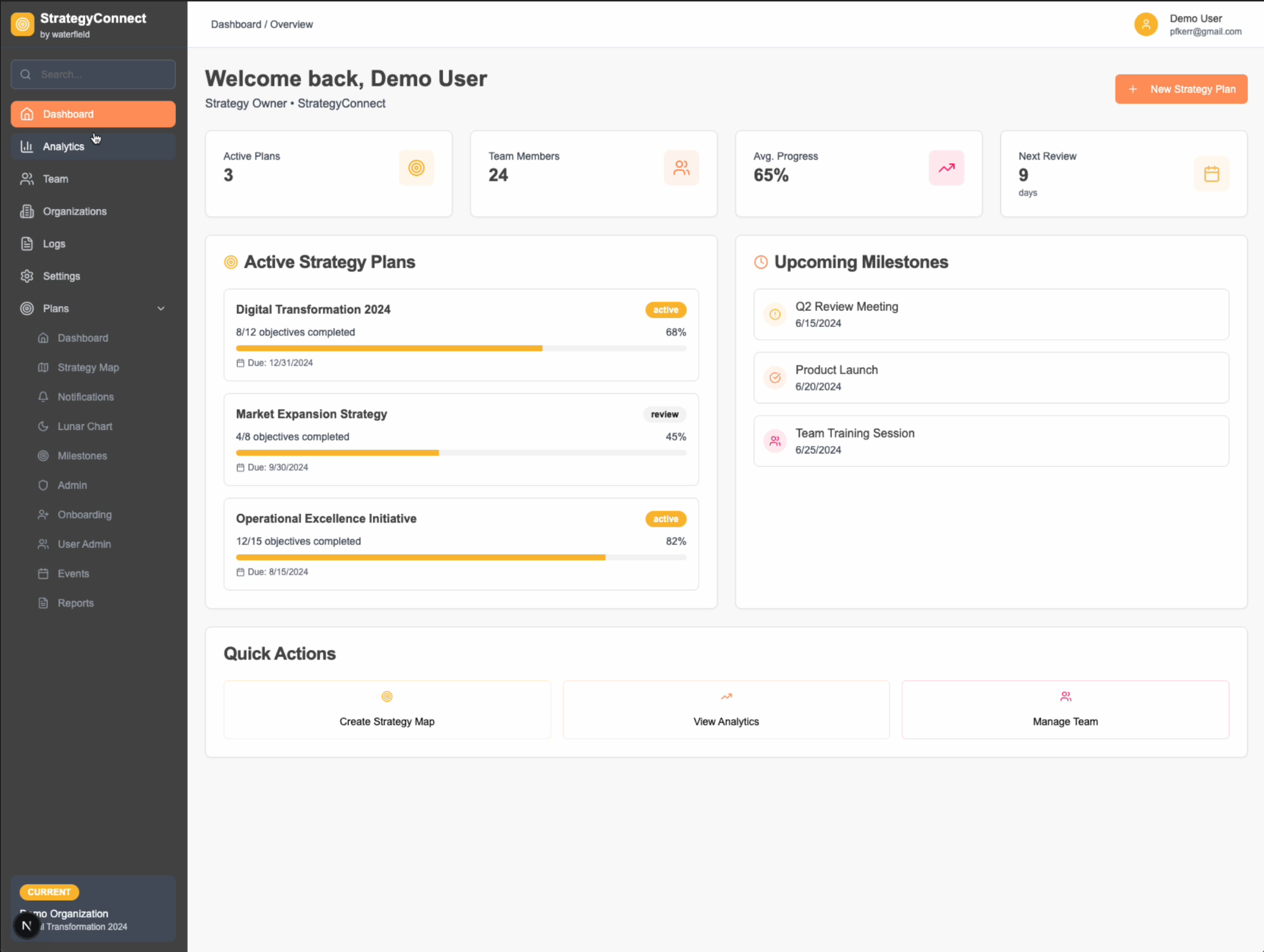
Years earlier, I’d built a platform for Strategy Connect. It became a production system and continued evolving over many years.
The code evolved. The features evolved. More importantly, our understanding of the product evolved.
We’d wanted to rethink its technical foundation, but a conventional rebuild meant months of development and significant cost. There was always something more immediately valuable to spend that time and money on.
The existing platform worked.
The rebuild just didn’t make economic sense.
Then Aidan asked a different question.
Aidan, the owner of Strategy Connect, knew I’d been experimenting with AI-assisted development.
Instead of asking what a conventional rebuild would cost, we asked whether AI had changed the economics enough to make it worth trying.
Could we use what we’d learned about the product to create a new foundation with AI-assisted development?
Neither of us knew exactly how it would go.
The cost of finding out had become small enough that we could try.
Then months became days.
This is where my view of AI-assisted development changed.
A rebuild I would previously have expected to take months took days.
We weren’t recreating years of development in a few days. We already had something far more valuable than a blank specification: years of understanding what the product needed to be.
AI dramatically shortened the distance between that understanding and working software.
And suddenly a rebuild we’d struggled to justify became practical.
Monthsexpected
Daysto a new foundation
Then something even more interesting happened.
Aidan continued developing the platform himself.
He isn’t a software developer. But he understands the business and the product deeply.
Historically, someone in his position might describe a change, hand it to a developer, wait for it to be implemented, review it and repeat.
AI-assisted development gave him a much more direct role in shaping the software.
That didn’t eliminate the need for engineering judgement. But it changed who could participate in building software — and that interested me as much as the speed of the rebuild.
It changed what felt practical to try.
For most of my career, an idea had to justify a team, a timeline and a development budget before it could become working software.
That constraint hasn’t disappeared.
But the threshold has moved.
Architecture still matters. Product judgement still matters. Engineering still matters. You still need to understand the problem, decide what should exist and assess whether what you’ve built is any good.
What changed was how quickly we could turn that thinking into something real enough to test.
And that changes which ideas are worth trying in the first place.
AI surprised me again.
In the late 90s, I was amazed that I could write software capable of looking at an image it hadn’t seen before and deciding which tank was in it.
Nearly thirty years later, AI surprised me from the other direction.
This time, it was helping me write the software.
I now approach a rebuild or a new product idea with a different sense of what might be practical.
The thinking still matters.
The distance between thinking and building has become dramatically shorter.
BUILDING SOFTWARE GOT FASTER.
THE THINKING STILL MATTERS.